Book Flowers Embroidery Design
A Designer’s First Stitch: What This Design *Feels* Like
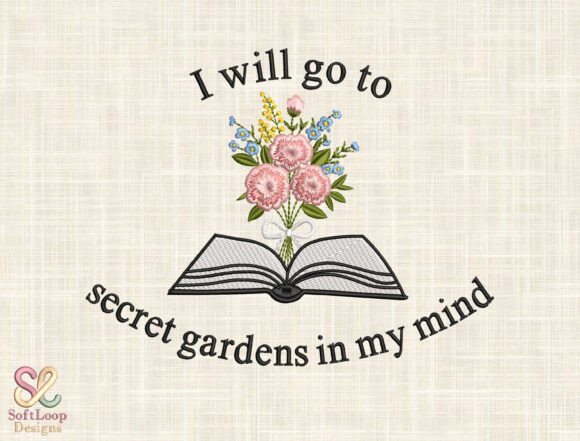
As an embroidery designer who’s tested hundreds of digital embroidery files for personalized gift shops, the first thing I notice about Book Flowers Embroidery Design isn’t technical—it’s emotional. That phrase—“I will go to secret gardens in my mind”—lands softly but memorably. It’s not loud or trendy; it’s tender, literary, and quietly confident. The floral motifs wrap gently around the text like vines on an old library book spine—neither fussy nor minimal, but deeply intentional. To me, this design reads as elegant romantic, with a whisper of vintage charm and a strong handmade soul. It doesn’t shout “modern” or “boho”—it simply feels timeless. That’s gold for gift makers.
Where It Shines: Real-World Personalized Gift Applications
This isn’t just a pretty file—it’s a versatile storytelling tool for small business owners. As a designer preparing for holiday custom orders, I’ve already sketched how Book Flowers Embroidery Design elevates real products:
- Baby embroidery: Stitched on organic cotton swaddle blankets or linen onesies, it becomes a gentle, literary lullaby—ideal for book-loving parents wanting meaning over motifs.
- Wedding gift: On ivory linen pillow covers or heirloom handkerchiefs, it adds poetic intimacy without cliché—perfect for the couple who met at a poetry reading or shares a favorite novel.
- Embroidered towel: Works beautifully on high-quality flour-sack or waffle-weave kitchen towels—soft contrast, readable script, and botanical balance make it feel curated, not generic.
- Nursery decor: When scaled down for framed hoop art or stitched onto muslin wall hangings, it whispers calm instead of clamor—ideal for minimalist or literary-themed nurseries.
- Pillow cover & tote bag: Holds up well on medium-weight canvas or linen blends. The balanced stitch density avoids stiffness while preserving delicate petal shapes.
- Aprons & blanket embroidery: On structured chef aprons or lightweight throws, it reads clearly from across a room—no squinting required.
For Etsy sellers and craft fair vendors, this design bridges aesthetics and audience: it attracts bookworms, writers, educators, therapists, librarians—and anyone who treasures quiet imagination. That’s not a niche; it’s a community.
Where to Pause: Practical Considerations for Reliable Results
Not every fabric or product is a match—and that’s where experience matters. Here’s where I recommend extra care with Book Flowers Embroidery Design:
- Small lettering: The script is graceful but not ultra-bold. Avoid scaling below 3.5 inches wide on final products—especially for baby embroidery or embroidered towels meant to last years.
- Textured fabric: Heavy terry cloth or highly napped fleece can blur fine lines. Use cutaway stabilizer + dense tear-away for crispness on thick towels.
- Stretchy baby clothes: Not ideal for knits without proper stabilization and reduced stitch density—test first on ribbed cotton jersey scraps.
- Curved surfaces: Skip tight curves (like mug sleeves or curved tote straps) unless you’re using flexible stabilizer and re-hooping mid-stitch.
- Dark fabric: The design relies on soft contrast. On charcoal or navy, confirm thread colors provide enough lift—light sage, cream, or dusty rose often read better than stark white.
- Frequent washing: For items like kitchen towels or baby blankets, choose high-retention threads and lock stitches securely. Remind customers to wash cold and air-dry.
Why It Builds Trust—and Turns Browsers Into Buyers
In my work with small shop product development, I’ve learned that perceived value isn’t just about stitch count—it’s about resonance. Book Flowers Embroidery Design delivers that. Its literary warmth invites emotional connection before a single stitch is placed. Customers don’t just buy a monogrammed pillow—they buy a keepsake that says, “I see your inner world.”
That translates directly to stronger product photography (soft natural light + open book prop = instant mood), higher engagement on Etsy listings (longer dwell time, more saved items), and repeat buyers who return for matching nursery sets or wedding suites. For handmade product sellers, it reinforces authenticity—this isn’t mass-produced clipart. It feels considered, thoughtful, and human-made.
Pro Tips Before You Stitch Your First Customer Order
Before sending Book Flowers Embroidery Design into production, here’s my checklist—refined over 12 years of commercial embroidery:
- Test on scrap fabric that matches your final product’s weight and weave—not just muslin.
- Check thread color contrast under both daylight and warm indoor lighting.
- Confirm hoop size compatibility—some versions may require 5x7" or larger; verify before digitizing adjustments.
- Review stitch density: Too dense = stiff fabric; too sparse = fragile details. Aim for balanced fill in florals and clean satin edges on letters.
- Use proper stabilizer: Medium-weight cutaway for stable fabrics; lightweight tear-away for linens; fusible + tear-away combo for knits.
- Compare light and dark fabric mockups side-by-side—what reads beautifully on ivory may disappear on slate gray.
- Check small details after stitching: Petal tips, serif endings, and subtle leaf veins should remain distinct—not fused or frayed.
- Confirm commercial licensing before selling finished products. If the description doesn’t explicitly state commercial use rights, contact the creator first—never assume.
Remember: A great machine embroidery design only becomes a great personalized gift when paired with intention, testing, and respect for both fabric and feeling.
Final Thought: More Than a Design—A Quiet Invitation
Book Flowers Embroidery Design doesn’t chase trends. It offers something rarer in today’s marketplace: stillness with substance. Whether stitched on a baby blanket in a sunlit nursery or a linen towel hanging in a writer’s kitchen, it carries quiet weight. For embroidery makers, gift shop owners, and Etsy sellers building meaningful brands—not just inventory—it’s not just another digital embroidery file. It’s a gentle, stitch-perfect invitation to slow down, remember what matters, and make something that lasts.