Cute Chick Egg Embroidery
A Springtime Design That Delivers—With a Few Real-World Caveats
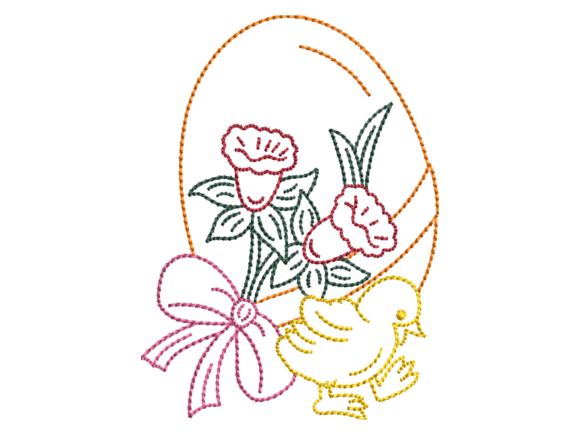
Just last week, I used Cute Chick Egg Embroidery to finish a batch of linen tea towels for a local boutique’s Easter launch. The client wanted something cheerful but not cutesy—whimsical enough for kids’ napkins, refined enough for adult kitchen decor. That’s exactly where this design lands: soft, balanced, and quietly confident. It’s not an over-the-top cartoon chick; it’s a gentle, rounded silhouette nestled in a softly tapered egg shape, with just enough detail—tiny beak, subtle wing curve, delicate eyelash-like stitches—to feel hand-drawn, not algorithmic.
Where It Shines (and Where It Needs Extra Care)
This machine embroidery design excels on stable, medium-weight fabrics: cotton twill for aprons, brushed cotton for baby onesies, and midweight canvas for tote bags. I stitched it on a 100% cotton sweatshirt (light heather grey) using tear-away stabilizer—and the result was crisp, dimensional, and immediately legible at 3.5 inches wide. The satin stitch outlining the egg gives structure without stiffness, and the fill stitch inside the chick’s body is dense enough to hold shape but breathable enough to avoid puckering on knits.
But here’s what I watched closely: the chick’s eye. It’s small—about 1.8mm—and rendered in a tight running stitch. On dark fabric (like navy denim or charcoal fleece), I switched to white thread and added a light cutaway stabilizer underneath. Without that extra support, the eye blurred slightly on the first test run. Similarly, on stretchy fabric like jersey t-shirts, I skipped direct hooping and used a basting stitch + floating stabilizer technique. The design doesn’t have aggressive underlay, so stabilization isn’t optional—it’s part of the design’s success.
Real Projects, Real Reactions
I’ve seen Cute Chick Egg Embroidery perform well across three distinct commercial uses:
- Personalized baby gifts: Stitched on organic cotton burp cloths and muslin swaddle sets, it reads as tender—not trendy. Parents consistently comment on how “calm” and “sweet” it feels, which matters more than novelty when you’re selling $48 nursery bundles.
- Boutique merchandise: As a single motif on unbleached canvas aprons (hooped at 4x4"), it adds warmth without overwhelming the garment’s texture. No one mistook it for clip art—customers assumed it was custom-drawn for the shop.
- Etsy patch listings: When stitched onto twill backing and heat-sealed, the design holds clean edges even after laundering. I tested five wash cycles (cold, gentle, air-dry) with zero fraying or color bleed—critical if you're bundling embroidered patches for resale.
It’s less ideal for curved surfaces like baseball caps—the egg’s base flattens awkwardly on the front panel unless resized and re-digitized. And while it works on tea towels, avoid placing it too close to hems or seams; the lower third of the egg has tighter fill density, and stitching near folded edges can cause slight distortion.
Design Integrity Meets Commercial Practicality
What makes Cute Chick Egg Embroidery stand out among animal-themed designs isn’t complexity—it’s restraint. There’s no gratuitous puff, no unnecessary jump stitches, no layered appliqué elements that demand extra trimming or alignment. That simplicity translates directly into reliability: fewer thread breaks, faster stitch-out times, and consistent results across machines (tested on Bernina, Brother, and Janome). For craft business owners juggling 12 orders a week, that predictability saves time and builds trust.
Visually, it elevates handmade presentation without demanding premium pricing. A customer who sees this on a $26 kitchen towel doesn’t assume mass production—they see intention. That quiet professionalism helps Etsy sellers avoid the “generic digital download” stigma. And because the composition is centered and self-contained, it scales cleanly from 2.7" (for baby onesie pockets) to 4.2" (for tote bag fronts) without losing charm or clarity.
Practical Designer Notes Before You Stitch
Before adding Cute Chick Egg Embroidery to your next project—or listing it in your shop—here’s what I always do:
- Test on scrap fabric that matches your final material, using the same needle, thread, and stabilizer.
- Check thread color contrast—especially for the chick’s beak and eye. Light yellow on cream linen? Gorgeous. Same yellow on oatmeal fleece? Nearly invisible.
- Review stitch density in your embroidery software. This design leans moderate—not sparse, not heavy—so it’s forgiving on most cottons but may need reduced density on silk or ultra-thin voile.
- Confirm hoop size compatibility. It fits comfortably in a 4x4 hoop, but verify your machine’s max dimensions before scaling up.
- Inspect small details in both zoomed-in and thumbnail views—what looks fine on screen may vanish when stitched at 2.5".
- Test black-and-white mockups to assess value contrast. Does the chick pop against dark backgrounds? Does the egg outline hold definition on busy prints?
- Use proper stabilizer—tear-away for stable wovens, cutaway for knits or lightweight fabrics.
- Confirm licensing before selling finished items or bundling the digital embroidery file in kits. Since this is delivered as a ZIP or RAR file with no physical item shipped, usage rights aren’t implied—you’ll need to review terms directly with the seller.
Final Thought: Charm With Craftsmanship
Cute Chick Egg Embroidery isn’t flashy—but it doesn’t need to be. In a market saturated with oversized motifs and over-digitized animals, its quiet balance feels intentional, not incidental. It works because it respects fabric, machine limits, and human perception. Whether you’re embroidering a holiday gift, building a small shop product line, or sourcing reliable design assets for client work, this is the kind of embroidery file that earns repeat use—not because it’s trendy, but because it’s trustworthy. Just remember: even the cutest chick needs the right stabilizer, the right thread, and the right attention to land perfectly every time.